LogButler DEA Compliance Blog
Home / Educational / Transition to Digital Narcotics Logs: Benefits for Medical Practices
Transition to Digital Narcotics Logs: What Benefits Medical Practices Get
When healthcare providers first meet with the LogButler’s digital logbook team, some may not even know that it’s critical for any type of practice that handles controlled substances (Schedules II–V) to record their use and all related transactions in detail.
Any infractions of those rules can lead to penalties and fines that now start from $19,000 per violation (as of the end of 2025). So, if you have more than one serious recordkeeping infraction (incomplete information, reconciliation errors, lost entries, DEA forms or missing invoices, etc.), violations of the Controlled Substances Act will multiply, increasing the total fine.
For example, a weight-loss physician operating in Georgia had to pay $100,000 for failing to maintain accurate records and received a 2-year stringent oversight by the DEA to keep a DEA registration. Here’s an example of even a bigger penalty for a Medical Center in New Hampshire that had to pay $2 million for the inaccurate recordkeeping and diversion of controlled drugs.
Benefits of Transitioning to a Digital Logbook
1. Digital Logging Saves Time and Effort
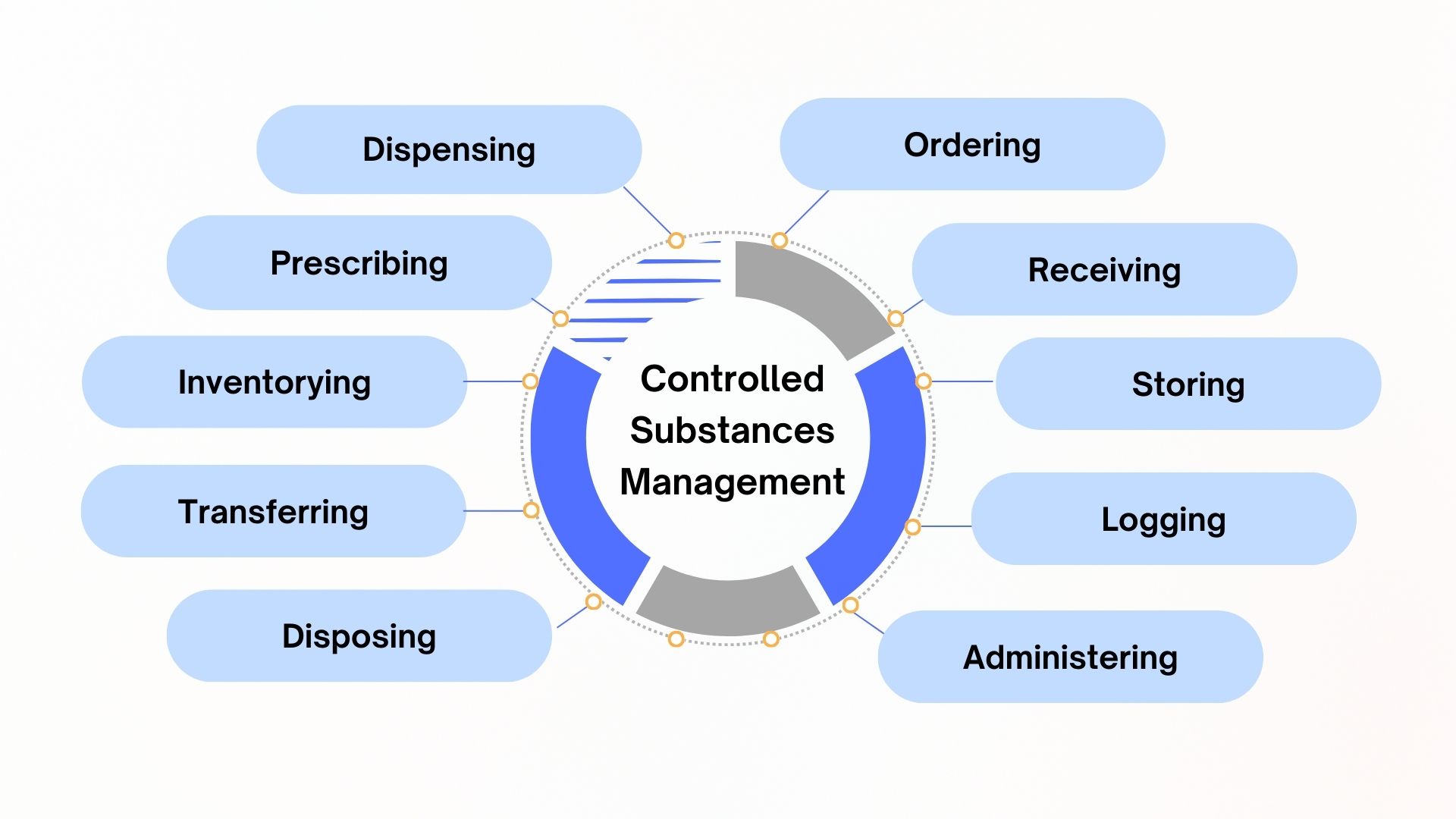
A digital logbook is designed to partially automate routine tasks of handling controlled drugs within DEA requirements and help you build an efficient, fully compliant workflow:
2. Better Visibility into Controlled Drugs Inventory
Every clinic seeks an ideal system where all medication records could be kept in one place, helping to track inventory and keep workflows uniform and secure for all their members.
LogButler’s digital logbook allows seeing the bigger picture and the lifecycle of each drug from the moment it enters your clinic. Using such tools together with cost-effective hardware, you can simplify inventory counts, manage inventory levels, and keep track of every vial and pill.