LogButler DEA Compliance Blog
Home / Educational / The Cost of Non-Compliance with Controlled Substances Regulations
The Cost of Non-Compliance with Controlled Substances Regulations
Handling controlled substances in your facility can be complex and time-consuming. Yet, it becomes a legal responsibility of all practitioners as soon as they obtain a DEA registration. The cost of non-compliance is painfully high. If you prescribe, administer, and store scheduled drugs, you have to comply with both federal and state laws.
Faults that Lead to Non-Compliance
Let’s take a closer look at most common violations and non-compliance examples:
- Incomplete, inadequate, or inaccurate controlled drugs records
- Falsifying or altering records due to discrepancies
- Issuing prescriptions without proper patient evaluation or valid doctor-patient relationship
- High dosage prescriptions of scheduled drugs that weren’t clinically justified
- Failing to securely store controlled drugs (which can lead to a theft or loss)
- Unauthorized access to scheduled drugs
- Missing the documentation of required Biennial inventory count
- Diversion of medications due to theft or loss of drugs and failing to report about them to the DEA. The facility has to have proper security and storage controls to avert illegal use of their controlled substances.
How Much Will Non-Compliance Cost You?
If a DEA auditor spots any infractions during an inspection, you may get a Letter of Admonition and instructions on what should be fixed. While it’s only an administrative warning, it can already place your facility on the DEA’s radar.
Most likely, the DEA will come back to check whether a clinic improved and took corrective measures. If an auditor finds any compliance issues with the federal law, the facility might face penalties.

Moreover, frequently repeated and serious violations result in substantial and steep fines. Specifically, they can mount up to hundreds of thousands or even millions of dollars.
How is that possible? Because a single infraction in recordkeeping, for example, will cost you around $19,246 (as of 2026). And when multiple violations stack up, the total fines become simply staggering.
A case in point: Northeast Hospital had to pay $1,9 million for failing to follow recordkeeping regulations of the CSA and theft of over 17,000 units of controlled substances.
If the DEA inspector spots a cascade of compliance issues, the DEA may move to revoke a practitioner’s registration. The DEA’s decision to suspend a DEA registration isn’t taken lightly and usually occurs after significant or consistent compliance violations.
With the loss of a DEA registration, the practitioner will no longer be able to prescribe or administer controlled substances. Often, after the revocation, a state medical board follows with their own audit. They can also impose disciplinary actions, varying from license suspension and practice restrictions to full license revocation.
Want to know about your responsibilities as a DEA registrant? Keep the link to this DEA’s Practitioner’s Manual and learn all the essential requirements.
Severe DEA Violations and Their Consequences
For a one-person practice, large fines, DEA registration or license revocation will most likely mean the clinic’s closure.
While practices with multiple DEA registrants might have to deal with all the consequences of one person’s malpractice. These are usually financial losses, operational disruption, and great reputational damage that might have long-term effects on your practice too.
For example, a medical center in New Hampshire had to pay $2 million for failing to maintain accurate controlled substance records which led to the theft of fentanyl from the center’s inventory.
Unfortunately criminal charges of one of the clinic’s doctors may seriously damage the facility’s reputation, also undermining the patients trust.
Compliance violations, investigations, and legal convictions are bad news that always spread with a lightning speed.
How to Ensure Compliance with Federal and State Regulations
Compliance requires a consistent routine of controlled substances logging, reconciliation, and inventory management.
However, when these tasks rely on paper-based logbooks, they can take a lot of your time and effort. Paper records make it difficult to manage controlled substances and increase the risk of errors. Over time, compliance can become stressful and challenging.
Learn more about Common Logging Mistakes that can weaken your compliance and best ways to avoid them.
Simplify it with LogButler, a digital logbook that makes recordkeeping more reliable and secure. Designed with regulatory requirements in mind, it helps save time on logging and reconciliation.
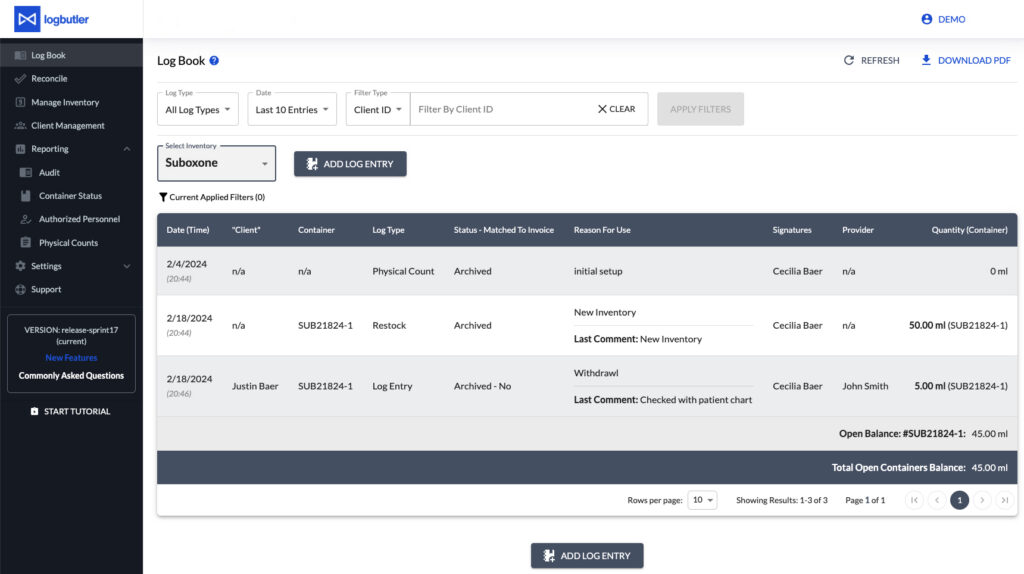
LogButler improves logging accuracy and minimizes errors, giving you greater confidence in your controlled substances compliance.
It also keeps a clear audit trail and speeds up physical counts. You can access digital logs at any time you need and spot the needed entry in seconds.
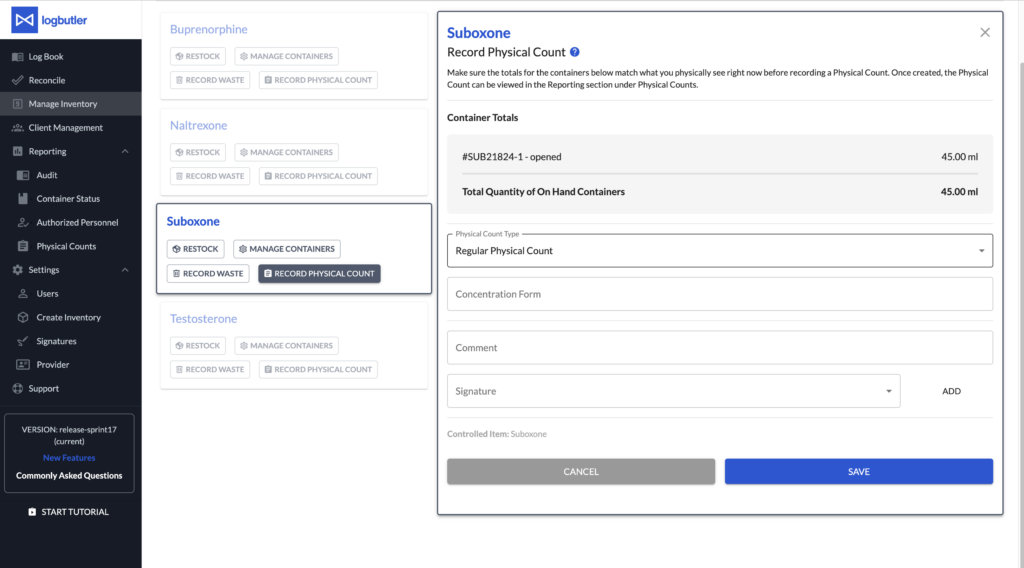
This way you can optimize routine tasks and stay better prepared for the DEA inspections.
Want to know more about LogButler? Contact us to discover how it helps facilities across states achieve full compliance with both federal and state regulations.